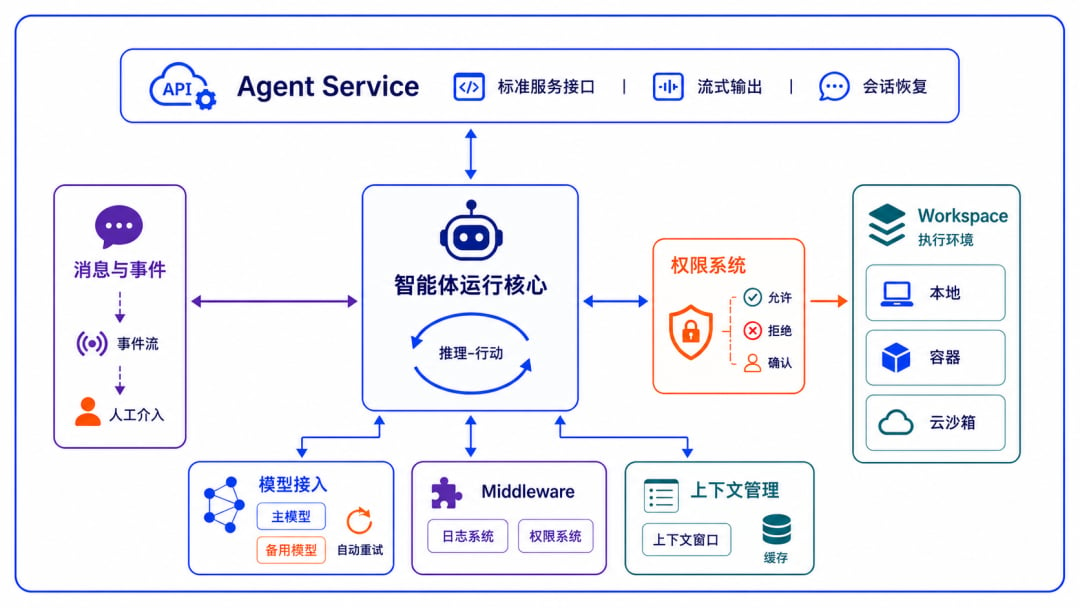
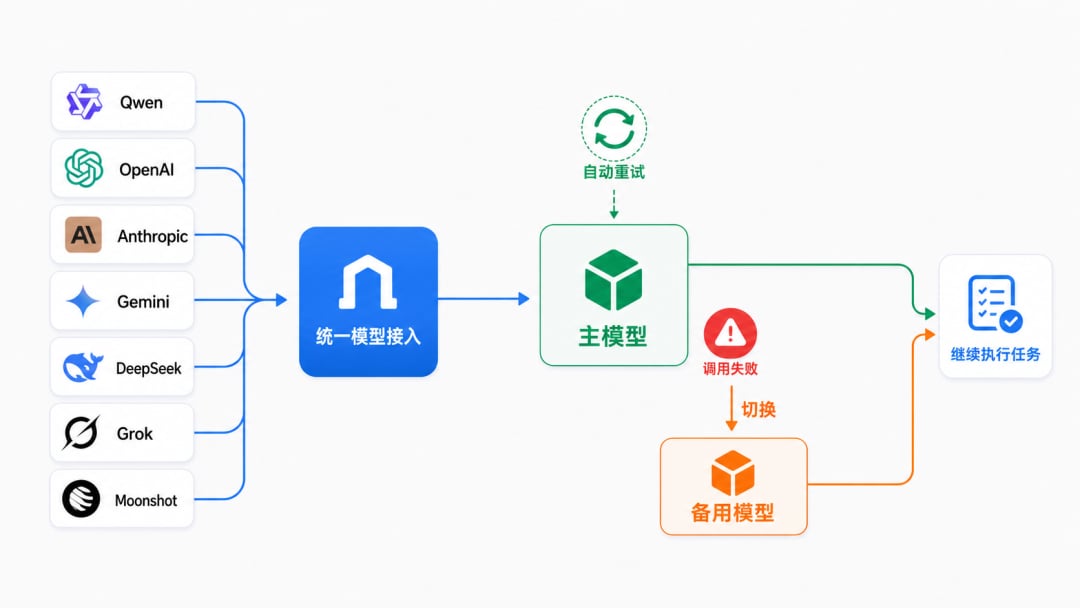
1. Model Integration: Fault Tolerance on Top of an Open Ecosystem
2. Messages and Events: From Chat Strings to an Interactive Execution Stream
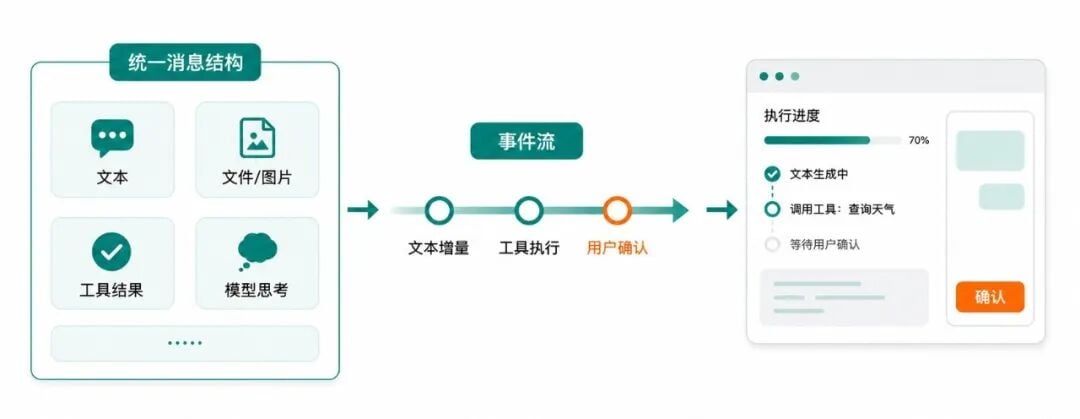
Content Block. Within that, DataBlock supports both base64 and URL data sources, making it easier to align with the multimodal and file capabilities of different model APIs.
On top of that foundation, AgentScope 2.0 introduces an event system. A single agent reply is no longer just a final string — it can stream events such as model-call start, text deltas, tool calls, tool results, user confirmations, and external execution updates. This lets the front-end UI render the agent’s work as it happens, and it turns human confirmation, human intervention, and external tool execution into first-class capabilities of the framework. For example, when the agent is about to invoke a sensitive tool, it can fire a user confirmation; when a tool runs in an external environment, the agent can wait for the external result and then continue the task.
So the upgrades to the message module and event system do more than reinforce AgentScope’s “transparent” principle. They make the agent’s execution observable, interactive, and interruptible. What developers see is no longer just a final answer — it is an execution stream that can be watched and steered as it unfolds.
3. Permission System: Bounded Autonomy
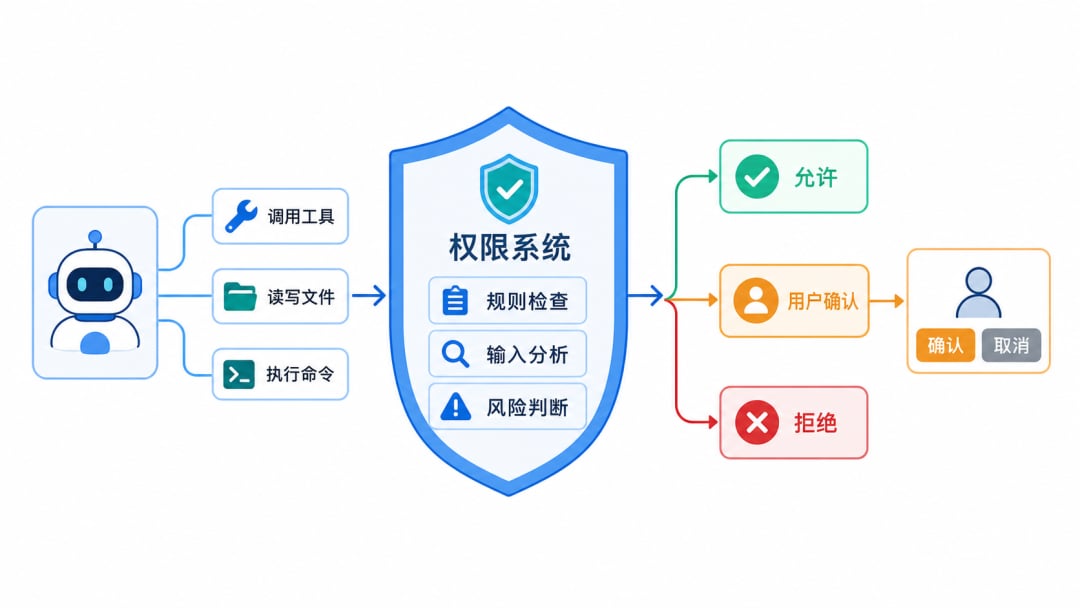
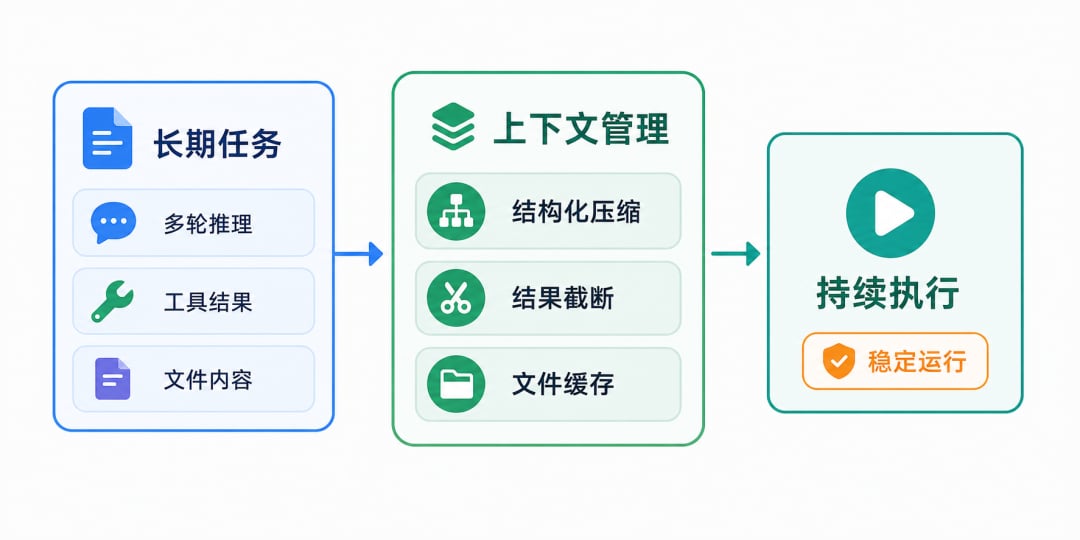
4. Context Management Rebuilt: Supporting Long Tasks and Performance
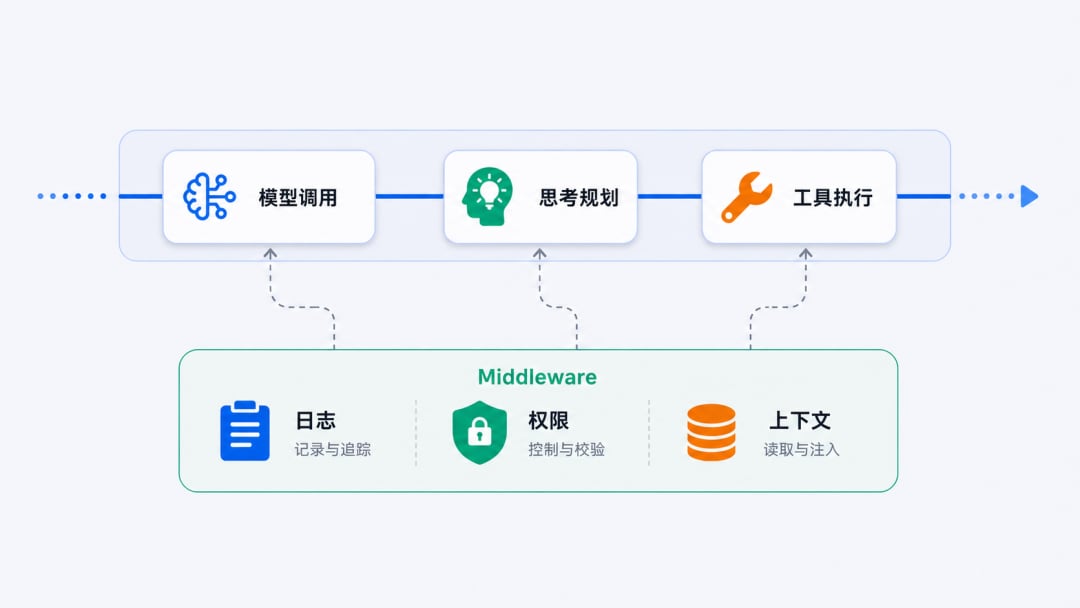
5. Middleware: A More Flexible Extension Surface
6. Workspace: Decoupling Execution Environment from Agent Logic
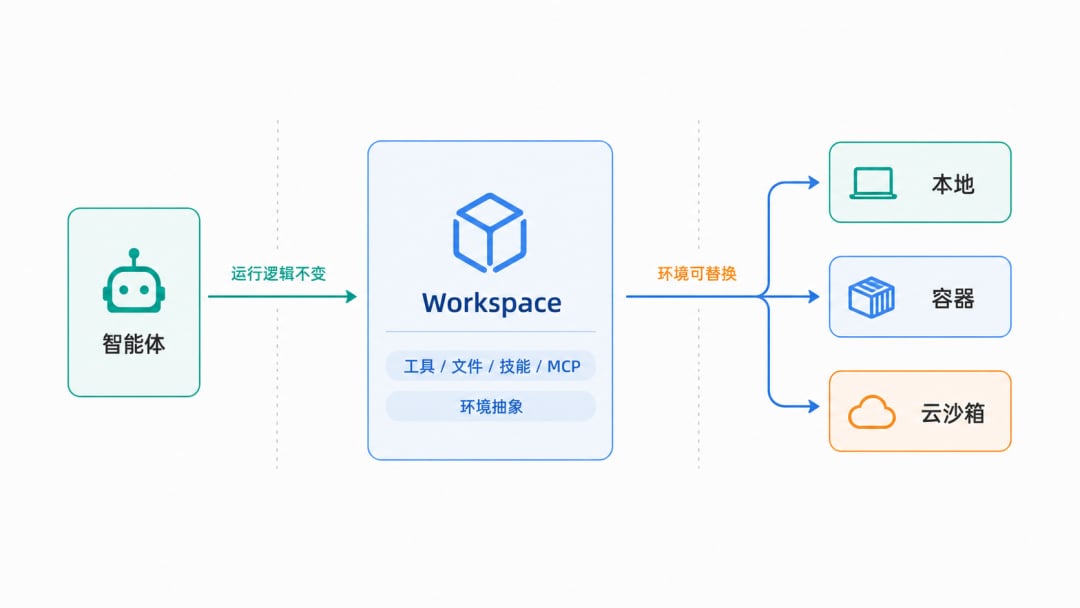
WorkspaceBase abstracts identity, lifecycle, resource discovery, context offloading, and dynamic resource management. Each backend only needs to implement the same set of interfaces to plug into AgentScope’s execution system.
Second, composition over coupling. The agent itself does not depend on a specific Workspace. It uses tools and resources indirectly, through the Toolkit and the instructions it receives. This keeps the execution environment replaceable while keeping the agent’s runtime logic stable and portable.
Third, pooling support. The Workspace ships with a warm-up pool: execution environments can be pre-initialized in batches, and the pool provides acquire / release / invalidate-and-replace operations. In scenarios such as parallel rollouts during RL training, this cuts the cost of creating environments repeatedly and improves resource reuse and task throughput.
With the Workspace, agents are no longer just “able to call tools.” They can keep working inside a replaceable, manageable execution environment. For complex tasks that need to move between local machines, containers, and cloud sandboxes, this abstraction becomes another foundation for stable operation and flexible scaling.
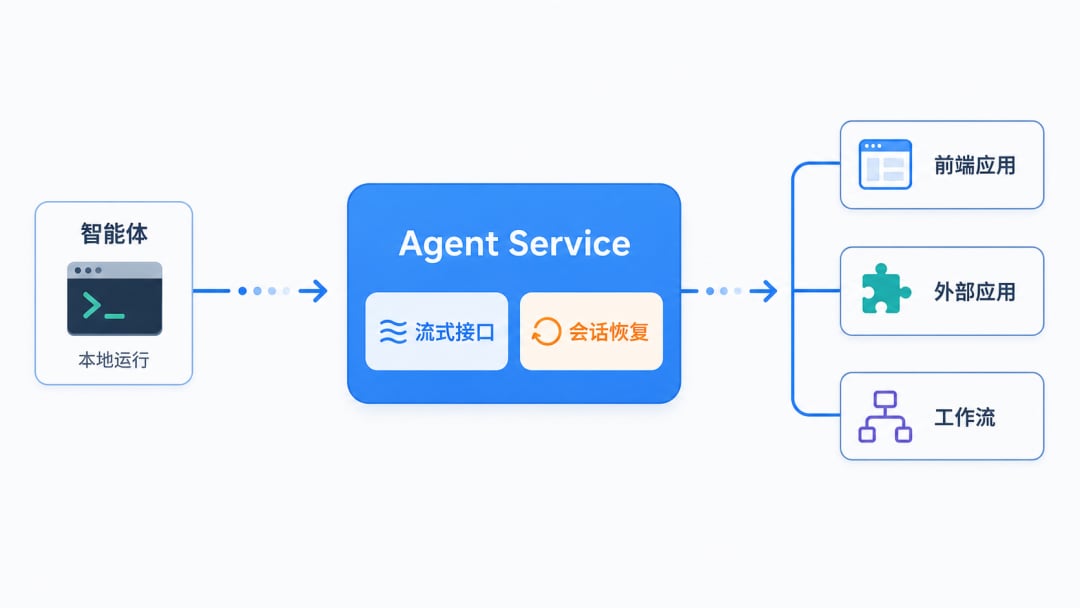
7. Agent Service: From Local Scripts to a Deployable System